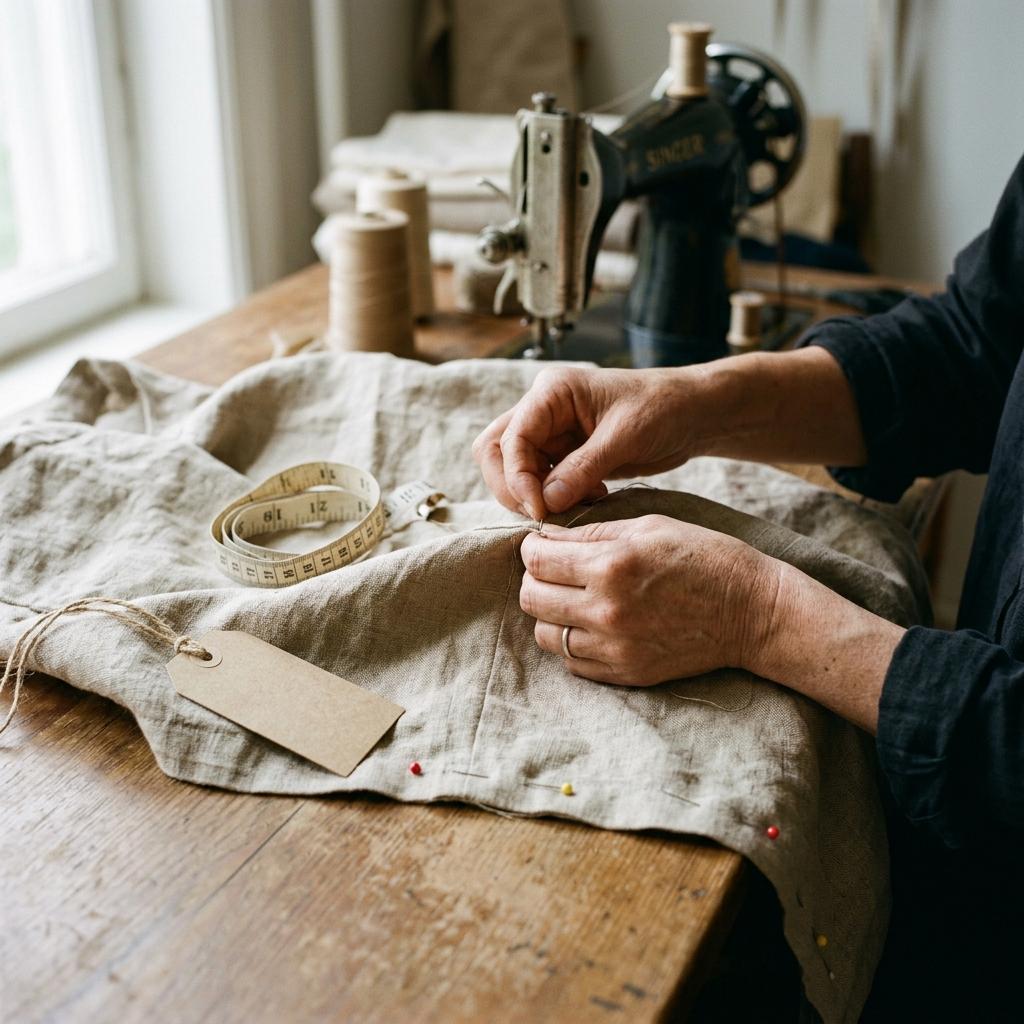
How much does an abaya cost in Dubai?
Three different things get called an abaya price in Dubai, and they are not close to each other. Knowing which one you are being quoted is most of the answer.
6 min read
The short answer, for 2026: a ready-made abaya you would actually want to wear starts at about AED 300, and there is no ceiling. Dubai's known boutique labels sit between AED 800 and AED 3,000, and the designer end runs past AED 5,000. Paying a tailor to cut and sew one when you bring your own cloth is about AED 200 to AED 350 for the labour, before the fabric. A full custom piece, where somebody sources the cloth and makes it to your measurements, usually starts at about AED 800.
Most confusion about abaya pricing comes from those three being quoted as though they were the same thing.
The three prices, and what each one buys
Ready-made, from AED 300 upward
Made in a size run, hanging on a rail. The high street lands at about AED 300 to AED 800 in nida or crepe, and AED 300 to AED 600 is where most decent nida sits. The known Dubai labels, the ones people name when you ask, sit between AED 800 and AED 3,000, and a designer piece goes past AED 5,000. You are paying for cloth and construction, and above a certain point for the name. The fit is whatever the pattern was cut to, which for an abaya matters less than for most garments but still decides how it hangs from the shoulder and where the sleeve ends.
Below about AED 200 you are usually looking at a different product: basic polyester off a market rail, priced to be bought fast and bargained over. It will read as cheap because it is, and it will not breathe in July. That end of the market is worth knowing about anyway, because the same piece changes price enormously with the address. A 2026 Dubai shop survey priced one crepe abaya at AED 95 in Deira and AED 420 in Mall of the Emirates, a spread of more than four times on location alone.
- Naif Souk, Deira. The cheapest rails in Dubai and the ones shoppers name for it. Reviewers report paying around AED 100 for pieces listed nearer AED 250 elsewhere, and bargaining is expected rather than rude.
- Sharjah Central Souq, the Blue Souq, by the Jubail bus station. Listings start around AED 50, and a good ready-to-wear piece in Sharjah generally runs AED 200 to AED 500. Go for the choice of abayas and shawls in one building.
- Meena Bazaar, Bur Dubai. Rails and tailors in the same few streets, which is the actual reason to go: you can buy cloth and have it cut on one trip.
- Karama, the Centre and the old market. Plain everyday abayas rather than occasion pieces, at everyday prices.
- Ajman market. Named across UAE shopping guides as a bargain destination on the same footing as Sharjah, worth the drive only if you are already out that way.
- Abaya Mall in Mirdif. Three floors of nothing but abayas, for comparing fifty in an afternoon instead of five.
If a quote surprises you in either direction, ask what the fibre is before anything else. That one question separates the AED 150 rail from the AED 600 one more reliably than anything you can see from across a shop.
Tailoring only, about AED 200 to AED 350
You buy the cloth yourself and pay a tailor to cut and sew it. The fabric shops and the tailors sit in the same districts, which is why people go there: Satwa for tailoring, Meena Bazaar in Bur Dubai for cloth and stitching in the same few streets, and the fabric shops off Naif Road in Deira. Published 2026 guides put plain nida stitching at AED 200 to AED 350, and Satwa tailoring listings start near AED 180 for cutting and sewing.
The number sounds low until the cloth is added. An abaya takes roughly three metres, and our own 2026 supplier quotes put a metre at about AED 20 for local cotton, AED 36 for imported linen landed here, and about AED 65 for good linen bought locally. So the honest total for this route is AED 260 to AED 550 before any embroidery, and it is only the cheapest one if you already know what fabric you want and do not mind two trips.
Full custom, from about AED 800
Somebody else sources the cloth, takes your measurements and makes the piece. The floor is around AED 800 and the ceiling is wherever the embroidery stops. Hand embroidery, beading and lacework are the three things that move this number fastest, and they move it a long way.
What actually drives the price
- The fabric, and it is the biggest single line. Nida and crepe sit at the bottom, linen and silk blends well above.
- Hand work. Embroidery, beading and crystals are priced by the hour, so they scale with how much of the garment they cover.
- Whether it is cut to you. Measurements mean a fitting and a pattern, which is labour before any cloth is touched.
- How many are being made. A piece from a size run costs less than a piece made once, for the same reason anything does.
What does not move it much, despite how it is often sold: the colour, and the number of buttons.
What to check before you pay
- Ask what the fibre is, not what the fabric is called. If the answer is a name rather than a fibre, ask again.
- Ask whether the quote includes the cloth. This is where most of the confusion sits.
- Ask how many fittings are included, and whether alterations after the first cost extra.
- For anything with hand work, ask the price of the plain version first, then the addition. One number hides which half you are paying for.
Nida is a fabric name, not a fibre. It is almost always polyester. Ask for the fibre.
Where a linen abaya sits
Linen is unusual in this market and costs more per metre than the polyester crepes most abayas are cut from. It is also the reason to choose one: it lets sweat out, which matters more for the outer layer than for anything worn underneath.
You know the price now. The next question is what goes under it, which turns out to be a colour decision more than a fabric one, and there is a table of pairings for it.
Ours will be AED 699 when we open: cut to your measurements, in 100% linen, made after it is ordered. The comparison that matters is not the AED 300 rail, because that is a size run and this is not. It is the AED 800 that full custom starts at, and the AED 800 to AED 3,000 the Dubai boutique labels charge for a piece that was still cut to a chart rather than to you. AED 699 sits below both, and that is the whole claim. We hold the number by making one design properly instead of sourcing something different for every order, and in Dubai we come to you and take the measurements ourselves rather than charging for the visit.
We open in early October. If you are in Dubai we come to you and take the measurements ourselves before anything is cut, free on your first order. Leave your email on the home page and we will tell you the day.
The gap between a rail price and a made to measure price is almost entirely the fitting. This is what being measured changes, and what it honestly does not.
The linen argument above rests on a single number, moisture regain. This puts that number against every other fabric on a Dubai rail, including the polyester most abayas are cut from.
Price ranges above are from 2026 UAE market guides published by Luxury and More, Khayat and NYLA, cross-checked against ready-made pricing listed by Dubai abaya retailers and Best Dubai Things’ 2026 shop survey for the Deira and Mall of the Emirates figures. The places and their prices come from 2026 abaya shopping guides by Noor Zara, Lamis, UAE Service Guide and Dubai-On, Tripadvisor reviews of Naif Souk, Sharjah retailer listings for the Central Souq figures, and Satwa tailoring listings for the stitching prices. Fabric costs per metre are our own 2026 supplier quotes. Fibre composition of nida is from abaya fabric suppliers including Fabric UK and The Hijab Company.
Shaklek makes clothes to order in the UAE. You choose the cut, the length and the colour, and a tailor makes that one piece.
We are not open yet. If you are in Dubai we come to you and take your measurements ourselves, free on your first order.