What to wear in Dubai summer: a fabric-by-fabric guide
Everyone arriving in the UAE is told to wear loose and light colours. That advice is not wrong, but it skips the thing that matters most, which is what the fabric is made of.
6 min read
The short answer: linen first, cotton second, and nothing made of polyester. Cover more skin rather than less, keep it loose enough that air moves underneath it, and stop worrying about whether it is black or white. The National Center of Meteorology puts average August highs in Dubai between 40.9 and 43.2 degrees, with overnight lows near 30 and relative humidity peaking between 63 and 80 percent, and in that combination what your clothes are made of does more for how hot you feel than the colour or the cut. Here is each fabric and what to expect from it.
Humidity is the actual problem, not heat
Dry heat is survivable because sweat evaporates and evaporation cools you. Coastal humidity slows that evaporation down, which is why forty degrees in Dubai in August feels punishing while the same temperature inland feels merely hot.
Once you understand that, the rule for choosing clothing becomes simple. A good summer fabric is one that helps sweat leave your skin. A bad one is one that keeps it there.
The fabrics, ranked for this climate
Linen
The best answer for Gulf heat, and it is not close. Linen holds about 12% of its own weight in water before it feels wet, against 8.5% for cotton, and it gives that water up to the air faster. The weave is open. The fibre is stiff enough that the cloth stands slightly away from skin instead of clinging, so air moves underneath it. It creases immediately and it will not stop, and that is the trade for the other three.
Cotton
Breathable, soft, and much less prone to creasing than linen. It absorbs sweat well but holds onto it longer, so a cotton shirt on a very humid day can stay damp where linen would have dried. Excellent for most of the year, slightly outclassed in August.
Linen and cotton woven together
A long established cloth that trades some of linen's breathability for less creasing and a softer hand. How much of each depends entirely on the ratio, so read the composition on the label rather than the word blend. We cut 100% linen instead, because the reason to wear this cloth in August is that 12% figure, and cotton sits at 8.5% and polyester at under half a percent. Every point of either in a blend moves the number the wrong way.
Polyester, nylon, acrylic
Avoid in summer unless the garment was specifically engineered for sport. Polyester holds 0.2 to 0.4% of its weight in water, roughly thirty times less than linen, so sweat sits on your skin instead of moving into the cloth. A polyester dress in August humidity is uncomfortable in a way that has nothing to do with how it looks. This is also the fibre most abayas are cut from, since nida and most abaya crepes are polyester.
Rayon and viscose
Made from processed wood pulp, so more breathable than polyester and often lovely to wear. They lose strength when wet and can hold sweat marks. A reasonable middle option.
Cut matters, and here is the part usually left out
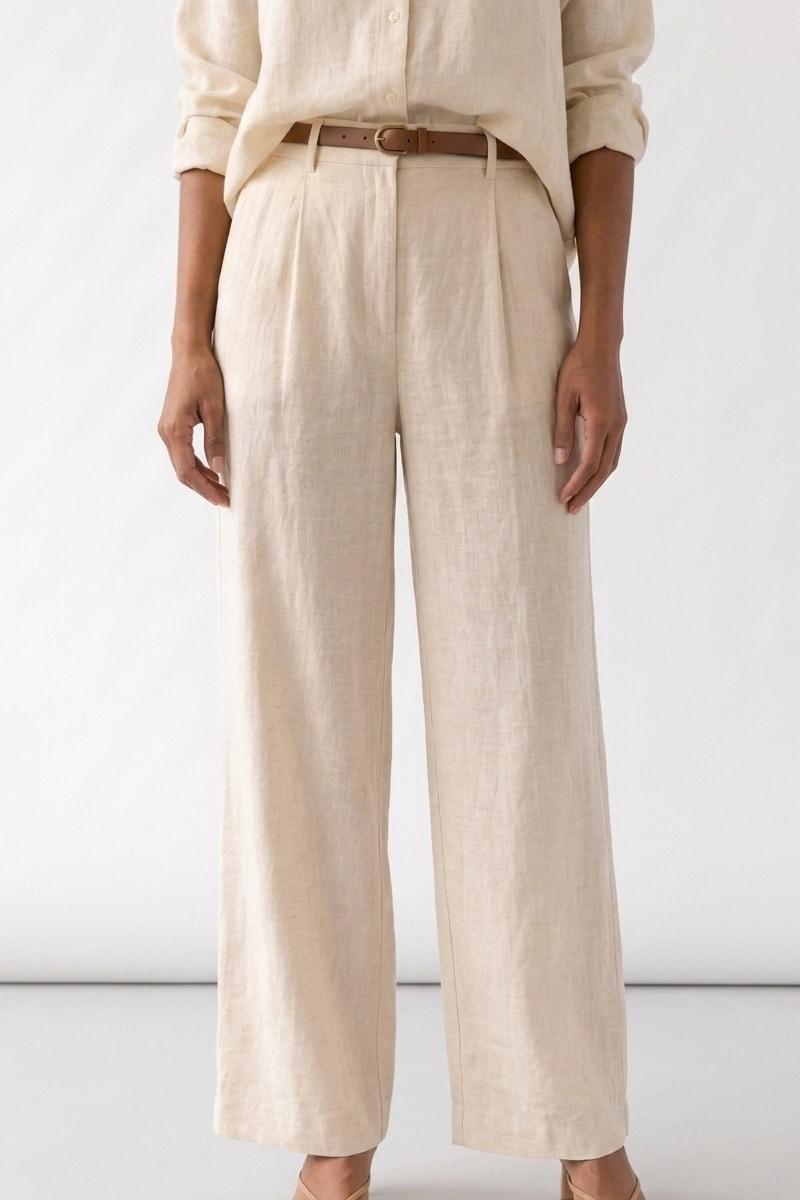
Loose is better than tight, because air moving between cloth and skin is what carries heat away. But loose is not the same as oversized. A garment that is simply too big bunches, sits badly and traps air in the wrong places without ever creating airflow.
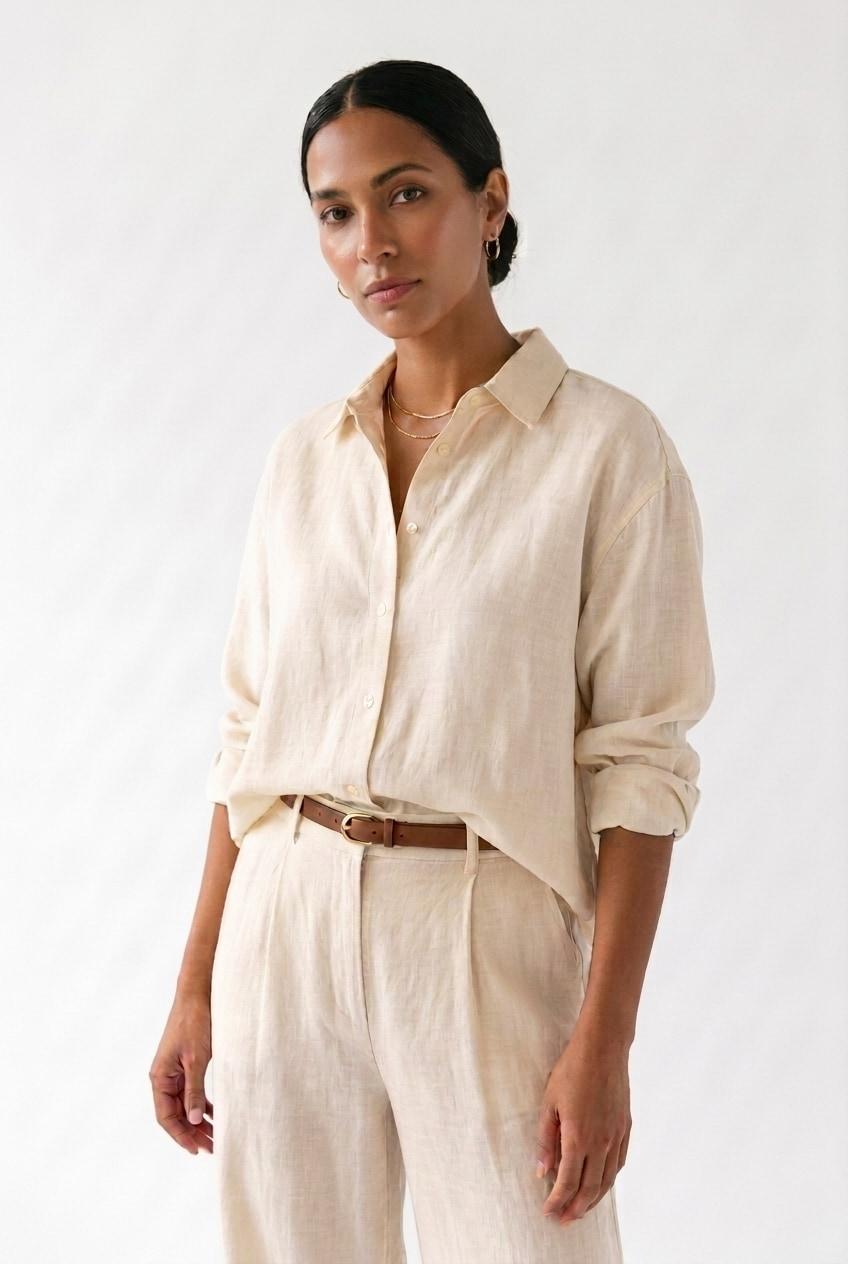
What actually works is a garment cut with deliberate room in the places where air should move, across the back, through the sleeve, down the leg, while still fitting at the shoulder and the waist. That is a fit question, and it is difficult to get from a garment made to a standard size chart for an average body.
Sleeves are worth more thought than they get. A covered arm in loose linen is frequently cooler than a bare one in direct sun, because the cloth shades the skin while air still moves underneath it. That is the same effect measured in the Negev robe study below, and it is why loose covering clothing is traditional across every hot region of the world rather than in spite of the heat.
In the Negev, the man in the black robe was no hotter than the man in the white one. The robes were loose.
Colour, which matters less than you have been told
White reflects more radiant heat than black, so in direct sun a white garment absorbs less. That much is true. The part nobody mentions is that it has been measured in a desert, and the answer was not what the advice implies.
In 1980 four researchers published the experiment in Nature. A volunteer stood in the Negev at 35 to 46 degrees in a black Bedouin robe, a white Bedouin robe, a tan army uniform and shorts. The black robe absorbed two and a half times the solar radiation of the white one, and the man wearing black was no hotter. The robes are loose, so air moving between cloth and skin carried the extra heat away before it arrived. Cut and fibre did the work. Colour did almost none of it.
So a black linen shirt will be more comfortable than a white polyester one on almost any August afternoon, and a loose black abaya is not the mistake it is often assumed to be. What matters is whether it is loose and what it is made of.
A practical summer wardrobe for the UAE
- Loose linen shirts with room across the back and through the sleeve. Covering the arm is not the compromise it sounds like.
- Wide or straight leg pants rather than anything close fitting through the thigh.
- Something with sleeves kept for indoors. Air conditioning in Dubai offices and malls is genuinely cold, and the temperature swing across a single day is the real challenge of dressing here.
- Accept the creasing. Every fabric that performs in this heat creases, and any finish that stops it is doing so chemically.
Why we make clothes this way
Shaklek is made to order in the UAE. Nothing is cut before it is ordered, which means the cut can be chosen rather than accepted: the leg width, the length, the sleeve. For a climate where airflow through a garment is the difference between comfortable and not, being able to choose how much room a piece has is worth more than it would be anywhere else. If you are in Dubai we come to you and take the measurements ourselves, free on your first order.
If your outer layer is an abaya, this argument matters more rather than less, because that is the layer standing in the sun. Colour pairings for it, and the four mistakes people make underneath one.
Nida and most abaya crepes are the polyester this article tells you to avoid. If you want a linen one instead, here is what the market charges and where each price band is actually bought.
Airflow needs room in specific places, across the back, through the sleeve, down the leg, while the shoulder still fits. That is a fit problem, and a standard size chart is worst at exactly that one.
Sources: the black and white robe experiment is Shkolnik, Taylor, Finch and Borut, “Why do Bedouins wear black robes in hot deserts?”, Nature volume 283, 1980. August temperature and humidity figures are from the UAE National Center of Meteorology as reported by Gulf News. Moisture regain figures for linen, cotton and polyester are from Testex and TextilePulse fibre property data.
Shaklek makes clothes to order in the UAE. You choose the cut, the length and the colour, and a tailor makes that one piece.
We are not open yet. If you are in Dubai we come to you and take your measurements ourselves, free on your first order.